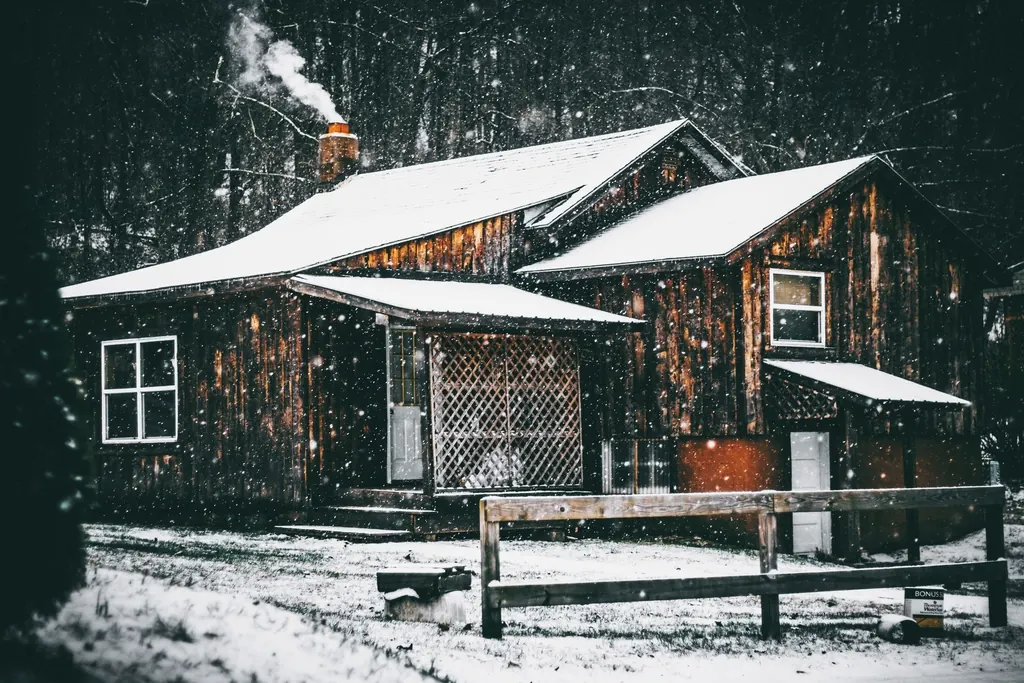
Big snow years in Jackson, Pinedale, Afton, Cody and the mountain cabin areas push roofs hard. Most snow-load damage isn’t a dramatic cave-in; it’s a ridge that starts to sag, a rafter that cracks, a porch or carport that pulls away from the house, or a door that suddenly won’t close. What you do in the first days shapes the claim.
1. Safety first
If framing is cracking or a roof is visibly deflecting, get people out of the area below it. Don’t climb on a loaded roof. Call a contractor experienced with snow removal and shoring.
2. Photograph before anything changes
- The roofline from several angles, showing any sag.
- Snow depth on the roof and on the ground, with a measuring stick if you can do it safely.
- Interior ceilings, cracks, doors that stick and any water stains.
- Attic framing, if you can see it safely.
3. Protect the building and keep receipts
Snow removal, temporary shoring and tarps are usually reasonable mitigation. Keep every invoice and take photos of the work being done.
4. Get an engineer involved
Structural damage needs an engineer’s assessment. That report becomes the backbone of the repair scope and is valuable evidence for a panel if appraisal is needed.
5. Expect coverage questions
Policies define collapse in specific ways, and some limit coverage for certain structures like awnings, fences, patios or pools when snow or ice is the cause. Some exclude long-term deterioration. Those are coverage questions. Once coverage is accepted, the cost of framing, decking, roofing, interiors and contents is a valuation question.
6. Watch the scope
Snow claims are often underscoped because hidden framing damage isn’t opened up. If the carrier’s estimate replaces the roof covering but not the cracked rafters underneath, that is a gap worth closing. Our snow load and ice dam page has more detail.